


FAQ
Sales and Order FAQs
Helping you choose the right solution, hassle-free.
The shelf life is the duration of time that unused ZERUST® products can be stored prior to use without losing their effectiveness. The in-service life is the duration of time that ZERUST® products will protect clean metal objects from corrosion if used properly.
Most ZERUST® products have a shelf life if up to two years when the product is stored in an external bag or box, out of direct sunlight and under shelter.
Most ZERUST® products have an in-service life of up to five years when protecting clean metal surfaces and when used as recommended by ZERUST® representatives.
Yes, if the bags are still in good condition without holes or tears. Bags that have an excessive number of holes or tears, have large holes or tears, or have begun to crack or lose strength due to excessive exposure to direct sunlight will not provide adequate corrosion protection and should not be reused.
If the rip is small, you can cover the rip or hole with a high quality piece of tape that is designed to adhere to low energy surfaces like polyethylene (please contact ZERUST®’s Technical Service Department for more information). Or, you can fold over and staple the area shut and then seal over the holes made by the staples with the recommended tape. If you have a large rip that you cannot close easily with tape or staples, you should replace the bag with a new one. The best seal is always a heat seal.
A light oil coating on the metal part is fine to use with ZERUST® bag. A heavy oil coating may affect the performance of the bag by keeping the corrosion inhibiting vapor molecules from reaching the metal surface. Please contact ZERUST® to determine the suitability of the oil and application.
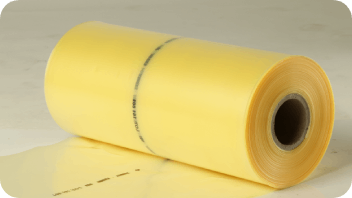
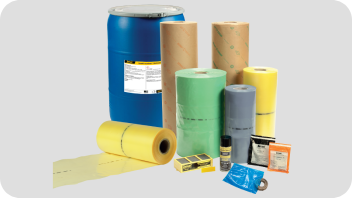
- Ferrous: Iron, steel and cast iron metals are protected using the Trademark yellow ZERUST® Ferrous Packaging.
- Non-Ferrous: Aluminum (and aluminum alloys containing copper and/or manganese), copper, brass, bronze and fully galvanized steel are protected using clear ZERUST® Non-Ferrous Packaging.
- Multimetal: Products that contain combinations of the Ferrous and Non-Ferrous metals listed above can be protected using green or clear ZERUST® Multimetal Packaging.
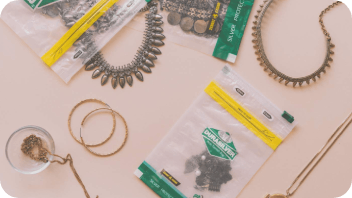
- Silver: Is protected from tarnishing with clear ZERUST® Silver Packaging. Although ZERUST® products are usually sold in the above standard colors to help our customers distinguish they type of metal protection they are using, we are able to custom produce most ZERUST® products in any color of your choice.
Yes, HNTI’s management systems confirms to the ISO 9001 Quality Management Standard.
Yes. ZERUST® films made of polyethylene and polypropylene have been recycled for years. ZERUST® products, themselves, are produced using only virgin materials to assure a high level of quality and consistency for our customers.
To purchase ZERUST® products, you can either call +91-7338844461 to speak with a customer service representative, or send an email to diwakar.ml@hnti.co.in.
For flat bag, sheet, sleeve, and round bottom bags.
- Width : Width is measured from edge to edge. If it is a slit seal bag, measure inside seal to inside seal or inside seal to fold.
- Bag length: Bag length is measured from top of bag to top of bottom seal or fold.
- Sleeve/Sheet length: Sleeve or sheet length is measured from cut edge to cut edge.
HNTI’s standard lead times vary depending on the product and quantity. For specific product inquiries, please contact our customer service representative at 044 2635 7087
Technical FAQs
Quick solutions to your most common technical queries.
Corrosion is the chemical or electrochemical reaction between a material, usually a metal, and its environment that produces a deterioration of the material and its properties. Usually corrosion is the oxidation of metals in the presence of water or water vapor, and is known as rust (iron, steel) while rust (galvanized steel), and other terms of corrosion failures such as tarnish, pitting and flaking.
There are many different types of corrosion including atmospheric corrosion, corrosion in waters, corrosion in soils, corrosion in chemical environments, mechanically assisted corrosion, high-temperature corrosion, microbiologically influenced corrosion, etc. From an economic safety and aesthetic standpoint, atmospheric corrosion is one of the most important types of corrosion. Atmospheric corrosion is enabled by atmospheric humidity and stimulated by pollutants in the atmosphere such as acid gases [sulfur dioxide (SO2), hydrogen sulfide (H2S), and carbon dioxide(CO2)], nitrogen oxides (NO and NO2), ozone (O3), and salts (chlorides and sulfides).
There are many different ways to prevent corrosion, including modifying the atmosphere by dehumidification, nitrogen purge, evacuation, etc, and creating a barrier on the metal surface to prevent the permeation of moisture. This barrier can be formed by liquid coating, such as oil, or via packaging products that contain VCI or Vapor Corrosion Inhibitors. Vapor Corrosion Inhibitors work by diffusing corrosion inhibiting molecules from a source (packaging film or paper for example) to metal surfaces. These molecules settle on metal surfaces and form a protective corrosion inhibiting layer that inhibits the electro-chemical reactions that cause corrosion to form.
NTIC combines the use of vapor corrosion inhibitors with material sciences and process management expertise to implement custom corrosion solutions for a customer or throughout an entire supply chain. We call this our ZERUST®/EXCOR® Integrated Corrosion Technologies .
ZERUST® products prevent corrosion in several ways:
- By acting as a protective barrier from external dirt and abrasion, and also as a barrier to help block the diffusion of corrosive acid gas pollutants from outside of packaging material (such as sulfur dioxide or hydrogen sulfide) – thereby preventing contact of these corrosive gases with enclosed metal surfaces.
- By vapor corrosion inhibitors that passivate the electron flow between the anodic and cathodic areas on metal surfaces and interrupt the electro-chemical corrosion process.
- By adding water repulsion properties to the metal surface, which inhibit water from permeating the metal surface and providing the electrolyte for corrosion reactions.
The vapor corrosion inhibitor portion of ZERUST® products is made of proprietary chemical formulations that are invisible, odorless, non-toxic, non-reactive, non-flammable and non-allergenic. These chemical formulations release a corrosion inhibiting vapor that diffuses throughout an enclosure that either contains formulations or is made from materials, and settles on exposed metal surfaces to form a microscopic corrosion inhibiting layer.
This protective layer will remain on the surface of the metal as long as there is no significant, continuous exchange of air within the enclosure. Ideally, there should be less than one air exchange per day (for example, when an electrical cabinet or package is opened briefly and occasionally). Once the metal part is removed from the enclosure, the corrosion inhibiting layer is no longer kept in place by equilibrium with the source, and it dissipates from metal surfaces (typically within about an hour) leaving the metal part clean, dry and corrosion-free.
The vapor diffusing properties of our corrosion inhibiting formulations offer an important advantage over conventional inhibitor coatings since the traces of these gas molecules penetrate into inaccessible crevices, gaps, and slots, reaching the surfaces of complex-shaped articles that are difficult to coat. They are adsorbed onto the surface of the metal to form a corrosion inhibiting protective layer that is just a few molecules thick. ZERUST® products may also include acid gas absorbing chemicals in the packaging material to act as a barrier and add another dimension to the protection of the metal content. These “scavenging” chemicals react and neutralize the polluted air that may diffuse through the ZERUST® material. Also used are various combinations of physical barrier properties that optimize the corrosion prevention and physical protection needs of our customers. These may range from plain low density polyethylene (LDPE) material to combinations of higher strength, higher tear resistance, higher resistance to sunlight or UV, static charge dissipation, and lower diffusion for moisture or acid gas molecules.
ZERUST® products offer corrosion protection without having to be in direct contact with or coated onto the parts that are being protected. Metal parts merely need to be enclosed in or with a ZERUST® product (where airflow is minimized) for protection to occur. With ZERUST®, it is no longer necessary to apply messy oils, greases and other corrosion protection compounds and incur the cost of their removal.
When parts in an already corroded condition are packaged in ZERUST® products, the corrosion process is slowed. However, our packaging products cannot remove corrosion that has already formed.
When wet parts are packaged in ZERUST® products, a certain amount of corrosion can be anticipated to take place. The amount of corrosion will be a function of the time it takes for the active corrosion inhibiting molecules to saturate the package enclosure, the corrosion inhibiting effectiveness of the designed system, the amount of moisture on the part, and the pH and contamination of the water itself.
Tests performed with electron scanning (ESCA) microscopy show that 2-4 hours after a steel test panel is removed from a ZERUST® package, all traces of the corrosion inhibiting molecular layer are gone from the surface of the part.
The period of time before one can expect corrosion to occur on a part depends on the cleanliness of the part and the environment around the part (relative humidity, presence of pollutants or wood, temperature, etc.)
The time required for active corrosion inhibiting molecules from product to saturate a package is a function of the volume and temperature of the package. Protection begins as soon as corrosion inhibiting molecules reach the metal surfaces, and maximum protection is achieved when the entire environment of the package is saturated with the corrosion inhibiting molecules.
Test data show that ZERUST® products do not adversely affect electrical and electronic components. In fact, the corrosion inhibiting molecules actually help improve the reliability of electrical and electronic components by preventing corrosion that is too small to be seen by the naked eye. It is absolutely safe to use ZERUST® packaging products to prevent corrosion of any instruments, devices and equipment which contain electric and electronic components.
Test data and review of corresponding scientific literature show that there are no inhalation or contact risks with ZERUST® products. ZERUST® products have been reviewed and cleared for use by factory, government and military personnel by the appropriate occupational health departments, including those of all major automotive manufacturers worldwide.
NTIC recommends keeping ZERUST® packaging products clean, out of direct sunlight and away from water while in storage. Simply keep the products in their original shipping cartons, bags or containers. If a carton is opened, cover the products with a sheet or bag of plain polyethylene to protect the products from dust and dirt. It is also recommended that ZERUST® products be stored in moderate temperatures, typical of most indoor workplace conditions to minimize exposure to excessive temperatures and outside elements such as direct sunlight, rain or snow. Storing ZERUST® products correctly ensures that the products will meet or exceed their estimated shelf life.
VCI stands for Volatile Corrosion Inhibitors. ZERUST® applies VCI technology to inhibit corrosion on metal. VCI film is packaging that generally consists of polyethylene film that has been impregnated with chemical formulations that are unique to each manufacturer. While the underlying formulations can vary significantly, the finished products all function similarity in that they release very low concentrations (typically in parts per ten-thousandth) of invisible corrosion inhibiting vapors into the surrounding air. The vapor molecules subsequently condense onto exposed metal surfaces and form a molecular corrosion shield that can protect against rust and other forms of corrosion for up to five (5) years, and even longer in some cases. When the VCI packaging is later removed, all vapor corrosion inhibiting molecules rapidly evaporate. This leaves the metal parts clean and ready for immediate use.
Collaborate With
Our Experts
Partner with our experts to address corrosion challenges through advanced protection technologies and proven engineering expertise. We deliver tailored corrosion prevention solutions that safeguard your critical metal assets, mitigate corrosion risks, and ensure long-term reliability, performance.

For new business enquires, please contact our ZERUST® representative: